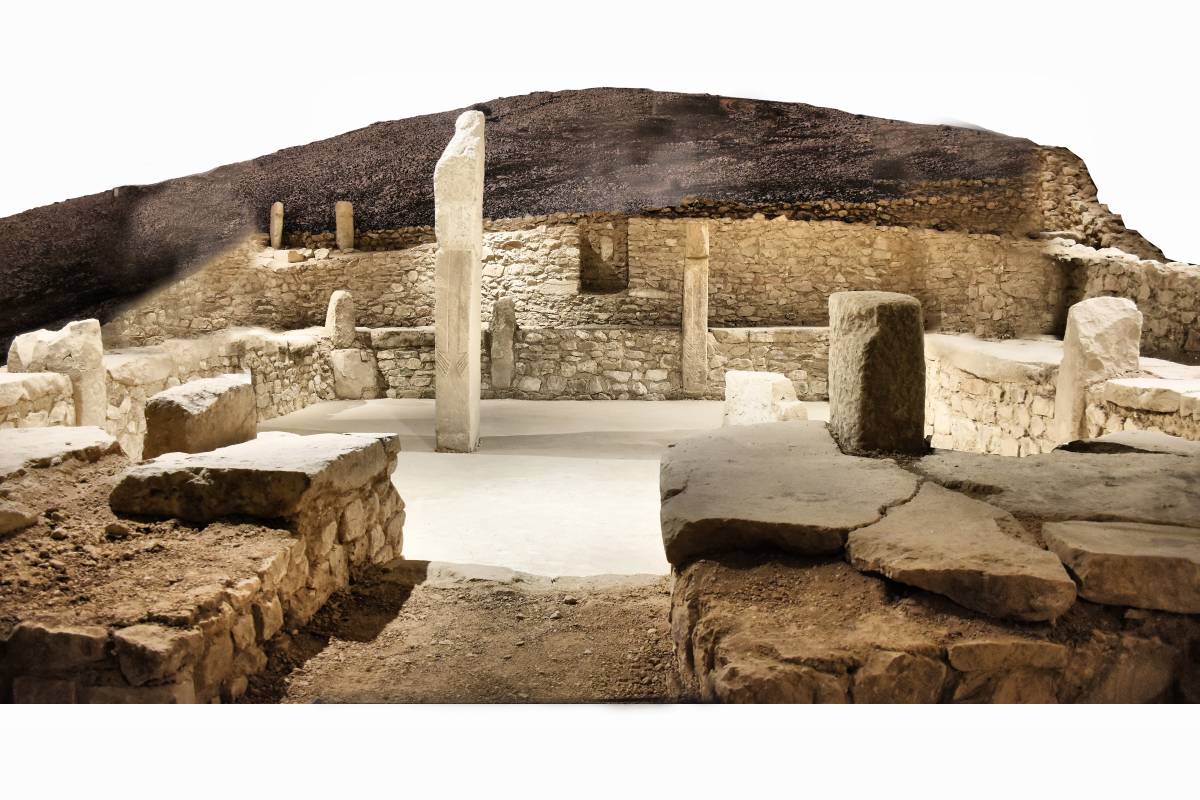


Description
Nevali Çori
The history of Nevala Çori Höyüğü in the Kantara Region of Hilvan, which was submerged under the waters of the GAP Projesi, dates back to 8500–8000 BC. Excavations, initiated in 1983 under the presidency of the Şanlıurfa Müze Müdürlüğü and the consultancy of Prof. H. Hauptmann from Heidelberg Üniversitesi, have found that Nevala Çori was a religious centre. Layers belonging to the Early Bronze Age, Chalcolithic Age and Aceramic Neolithic periods were uncovered during the excavations. In these excavations, the human head figure made of limestone, regarded as the world’s first statue, is considered the starting point of the historical journey towards Göbeklitepe.
Hilvan-I Ali Halil
Historical sources do not identify the founders or the original name of the settlement officially known as Hilvan-ı Ali Halil, or say who ruled it over time. The site lies where the village of Balkı now stands and on Dikme Tepesi, about 1 km north-east of the village.
Özveren village
In Özveren village there are remains of a historic castle and bastions. There are no archaeological studies relating to the period to which they belong.


